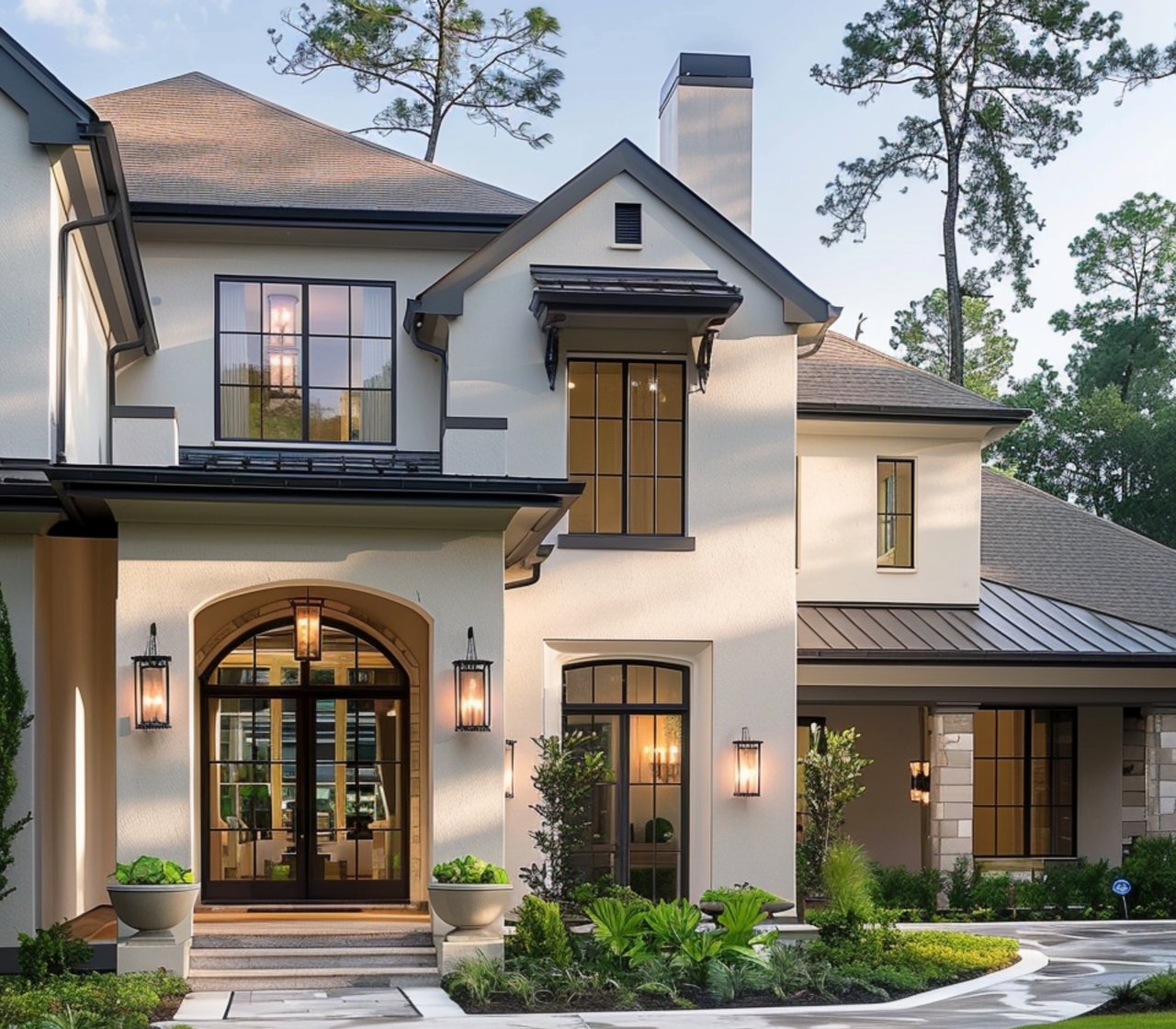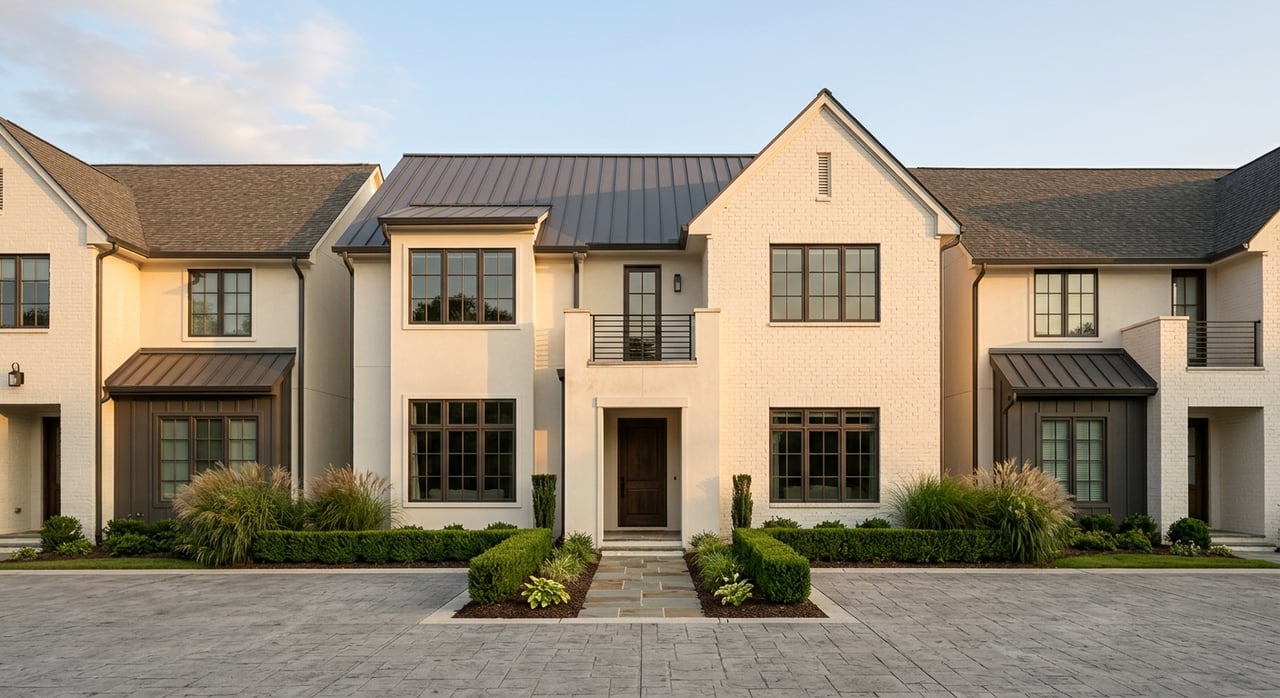
If you are deciding between a townhome and a house in Far North Dallas, you are really deciding which trade-offs fit your life best. Some buyers want lower day-to-day upkeep and a more convenient entry price, while others want more privacy, more land, and fewer shared rules. In this guide, you will see how the current Far North Dallas market, HOA structure, taxes, and resale patterns can shape the right choice for you. Let’s dive in.
Far North Dallas market snapshot
Far North Dallas gives you a wide range of housing options, and that matters when you compare a townhome to a house. Right now, the area has 495 homes for sale overall and 50 townhouses for sale. The townhouse segment shows a median listing price of $489,000.
The broader neighborhood market is higher. In March 2026, the median sale price in Far North Dallas was $607,000, up 6.5% year over year. Homes sold in about 63 days on average and closed at 96.9% of list price.
Townhomes are moving a bit differently. The townhouse page shows a slower 92-day pace and about two offers on average. That suggests buyers are still active, but attached homes can require more selective pricing and stronger comparison shopping.
Far North Dallas also has a broad pricing ladder within attached and detached options. Condo inventory shows 175 units for sale at a median listing price of $210,000, while detached homes in the current feed range from $675,000 to $3.185 million. In practical terms, your decision is not just about property type. It is also about space, finish level, lot size, and the lifestyle you want to support.
Townhome vs house basics
At a high level, townhomes and houses serve different priorities. A townhome often offers a lower purchase price, less exterior maintenance, and a more lock-and-leave setup. A house usually offers more privacy, more outdoor space, and more control over the property.
In Far North Dallas, those differences are visible in current listings. One Montfort townhome is a two-story, 2-bedroom, 2.5-bath home with 1,089 square feet listed at $250,000. It has a one-car garage, extra storage, and HOA dues of $391 per month.
A detached comparison in the same area tells a very different story. A home on Thomas Chapel Drive is a one-story, 4-bedroom, 3-bath property with 3,032 square feet listed at $675,000 on an 8,686-square-foot lot. It has no HOA dues.
That is the core decision in simple terms. Townhomes often trade land and privacy for convenience and lower entry cost. Houses often trade a higher purchase price for more room, more separation, and more independence.
When a townhome makes sense
A townhome can be a smart fit if you want a simpler ownership experience. In the Montfort example, the monthly HOA covers water, trash, maintenance, and access to a community pool. For many buyers, that bundled convenience can be worth the monthly fee.
This type of setup often appeals to buyers who travel often, want less exterior upkeep, or prefer a more predictable maintenance routine. If your goal is to spend less time managing the property itself, a townhome may fit well. It can also create a more accessible price point in a market where detached homes often cost more.
A townhome may also work well if you value shared amenities and a more compact footprint. That can be useful if you are buying your first home, relocating, or simply trying to keep your housing decision efficient. In Far North Dallas, the price spread between attached and detached homes makes this a real consideration, not just a stylistic one.
When a house makes sense
A house may be the better choice if privacy and space matter more to you than convenience. Detached homes usually give you more distance from neighbors, more outdoor area, and more flexibility in how you use the property. In Far North Dallas, that premium can be substantial, especially as lot size increases.
The detached market also appears to support a broader range of lifestyles. You may want extra bedrooms, a dedicated office, larger living areas, or room to enjoy the yard. If those needs are central to your day-to-day life, a house can deliver more long-term satisfaction.
There is also the question of control. A detached home with no HOA dues may give you fewer recurring association costs and fewer community-level restrictions. That does not mean lower total ownership cost in every case, but it does mean you are less likely to rely on a governing association for ongoing decisions.
Check the floor plan, not just the label
One of the easiest mistakes buyers make is assuming all townhomes have stairs and all houses do not. The current examples in Far North Dallas show why that shortcut can lead you in the wrong direction. The townhome example is two stories, while the detached home example is a one-story layout with all four bedrooms on the main level.
If stairs are a concern, you need to review the actual floor plan. This matters for downsizers, buyers planning ahead, and anyone who wants easier day-to-day movement through the home. The words townhome and house do not tell the whole story.
Layout can matter just as much as square footage. A well-designed smaller property may live better for you than a larger one with a less practical flow. When comparing options, focus on how you will use the space every day.
HOA fees in Far North Dallas
When you buy a townhome in Texas, the HOA packet is not a minor detail. It is one of the core documents that tells you how the association works, what it covers, and what rules apply to owners. The Texas State Law Library notes that every HOA has governing documents that outline rules, fines, meetings, and other procedures.
Chapter 209 of the Texas Property Code covers key topics like records access, dues, lien foreclosures, meetings, and voting rights. The state library also notes that no state agency oversees HOAs. That is why your review of the documents matters so much.
Texas also requires certain property owners' associations governed by Chapter 209 to file management certificates electronically after county recording. For you as a buyer, the practical takeaway is simple. You should treat the HOA packet as a serious due diligence item, not a box to check at the end.
What HOA dues may cover
HOA dues can look expensive at first glance, but the right comparison is total ownership cost, not just one line item. In the Montfort example, the $391 monthly HOA fee covers water, trash, maintenance, and community pool access. That shifts some ongoing responsibilities away from the owner.
By contrast, the detached Thomas Chapel home has no HOA dues. That gives you more freedom, but it also means more direct responsibility for maintenance and exterior upkeep. Depending on the property, that difference can affect both your monthly budget and your time.
Before you decide, ask what the fee includes and what it does not. You want to understand maintenance responsibilities, reserve funding, any special assessment risk, and whether the ownership structure is straightforward fee simple or something more limited. Those details shape both value and future flexibility.
Compare taxes and HOA together
In Dallas County, property taxes and HOA dues should be evaluated side by side. Looking at only one or the other can distort the real cost of ownership. The current Far North Dallas examples make that clear.
The Montfort townhome shows 2025 property tax of $5,456 on a $245,030 assessment, plus $391 per month in HOA dues. The Thomas Chapel house shows 2025 property tax of $16,163 on a $691,300 assessment and no HOA dues. These are not direct equals, but they show why your monthly and annual carrying costs need a full review.
If the home will be your primary residence, the Dallas Central Appraisal District says a residence homestead exemption requires you to own and live in the home on January 1, and you cannot claim it on another property. Once in place, the homestead cap limits annual appraised-value growth to 10%. That cap resets when ownership changes.
DCAD also notes that only the owner-occupied portion of a property can receive the exemption if part of the property is used for rental or another non-homestead purpose. If you are comparing a future primary home with a possible investment use, this distinction matters. It can affect your long-term cost planning.
Think ahead about rental rules
If you may rent the property later, a townhome purchase requires extra care. Texas Property Code Chapter 209 includes a section on residential leases and rental agreements. That means you should confirm rental policy, lease procedures, and any association-specific limits before assuming you can lease the home freely.
This issue is especially important for buyers who may relocate, keep the home as an investment, or build a longer-term portfolio. A lower purchase price does not automatically mean better investment flexibility. The governing documents can shape what you are actually allowed to do.
For detached homes, there may be fewer association-level rules if there is no HOA, but you still need to verify the property-specific setup. The broader point is to match the property type with your likely future use. A good purchase decision should still make sense if your plans evolve.
Resale in Far North Dallas
Resale matters even if you plan to stay for years. In Far North Dallas, detached houses likely have the broadest resale pool because they offer larger lots, more privacy, and no mandatory HOA dues. That does not mean townhomes are a weak choice, but it does mean they often appeal to a more specific buyer profile.
The current data supports that view. Townhomes show a median listing price below the broader neighborhood median sale price, and they are moving more slowly than the overall market. That usually means pricing, condition, and presentation matter even more.
The overall market is still reasonably active. Homes are closing at 96.9% of list price, and 12.4% are selling above list price. For either property type, buyers should focus on realistic pricing, functional layout, and the quality of the asset they are choosing.
Which option may fit you best
Your best choice depends on which trade-off you are willing to accept on purpose. If you want convenience, lower entry cost, and less hands-on upkeep, a townhome may be the better fit. If you want space, privacy, land, and a wider resale audience, a house may be worth the higher cost.
Here is a simple way to frame it:
- Choose a townhome if you value lock-and-leave living, shared maintenance, and a more moderate entry point.
- Choose a house if you value outdoor space, fewer shared walls, and more direct control over the property.
- Choose based on the specific floor plan if stairs, layout, or one-level living matter to you.
- Review the HOA packet carefully if rental flexibility or association rules may affect your future plans.
- Compare taxes and dues together so you understand the true cost of ownership.
The best real estate decisions are usually not about what is better in general. They are about what fits your goals, budget, and future plans with the fewest compromises.
If you want a data-driven, property-by-property opinion on which option makes the most sense in Far North Dallas, Edwin Jones offers a Private Client approach built around careful analysis, long-term strategy, and clear guidance.
FAQs
What is the price difference between townhomes and houses in Far North Dallas?
- Far North Dallas townhomes currently show a median listing price of $489,000, while the broader neighborhood median sale price is $607,000, so townhomes often provide a lower entry point.
What do HOA fees usually cover in a Far North Dallas townhome?
- Coverage varies by community, but one current Montfort townhome listing shows HOA dues covering water, trash, maintenance, and access to a community pool.
Are all Far North Dallas townhomes two stories?
- No. You should verify the floor plan for each property, because stairs depend on the specific layout, not just whether the home is labeled a townhome or a house.
Can you rent out a Far North Dallas townhome later?
- Possibly, but you need to review the HOA documents and applicable Chapter 209 lease provisions first, because association rules can affect rental policy and procedures.
How does the Dallas homestead exemption affect a Far North Dallas home purchase?
- If you own and live in the home on January 1 and do not claim another homestead, DCAD says you may qualify for a residence homestead exemption, and the homestead cap can limit annual appraised-value growth to 10% while you own it.
Which has better resale in Far North Dallas: a townhome or a house?
- Detached houses likely have a broader resale pool because they usually offer more privacy, larger lots, and no mandatory HOA dues, while townhomes tend to appeal to buyers seeking convenience and lower maintenance.